




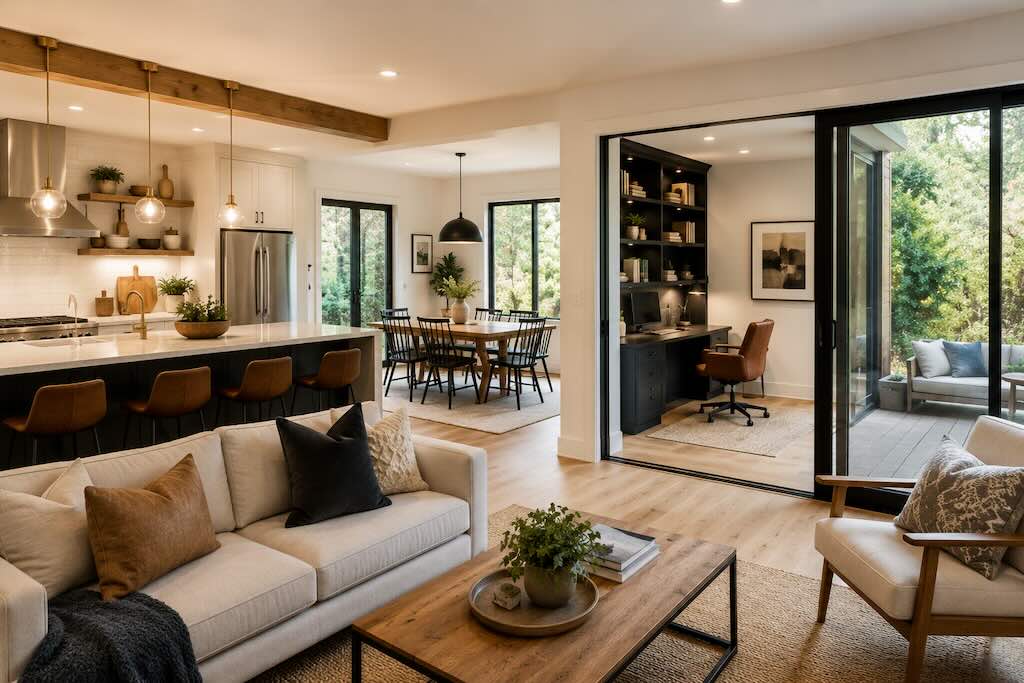
A successful renovation does not necessarily begin with a dramatic before-and-after. Often, the most valuable changes are quieter: a kitchen that is easier to move through, a home office with better daylight, a bathroom that remains comfortable as you age, or insulation that makes winter mornings noticeably less cold.
In 2026, the strongest renovation ideas are increasingly connected by the same principle: make the home work better before adding features simply because they are fashionable. Flexibility, energy performance, natural light and long-term usability deserve as much attention as finishes and color.
Editor’s note: This article has been updated for 2026 to replace outdated renovation trends and technology references with current guidance on multigenerational living, energy efficiency, smart-home planning, kitchens, home offices and natural light.
1. Design for Different Generations
A home designed around one particular stage of life can become frustrating surprisingly quickly. Children grow up. Parents get older. Mobility changes. Adult children may stay at home longer, while older relatives may eventually join the household.
That makes flexible, multigenerational design less of a niche idea and more of a practical way to approach renovation.
Think beyond simply creating another bedroom. A useful multigenerational layout may include a ground-floor sleeping space, an accessible bathroom, wider circulation areas, fewer changes in floor level and enough separation for different members of the household to have privacy.
The principles of universal design can be useful here. The U.S. Department of Housing and Urban Development provides guidance on residential accessibility and adaptable housing, while the underlying idea remains simple: a home should accommodate people with different physical abilities wherever practical.
A bathroom with a step-free shower and well-considered circulation can look contemporary now while becoming considerably more useful later.
Divine’s guide to designing a kitchen for aging in place applies the same long-term thinking to one of the busiest rooms in the house.
2. Make Energy Performance Part of the Renovation
New countertops are easy to photograph. Air sealing behind a wall is not. Yet the invisible parts of a renovation can have a greater effect on how comfortable the finished home feels.
Before spending heavily on decorative changes, consider whether the project creates an opportunity to improve insulation, air sealing, heating and cooling, windows or other parts of the building envelope.
The U.S. Department of Energy provides current information on qualifying energy-efficient home improvements in the United States, including certain insulation, windows, heat pumps and home energy audits. Incentives and eligibility can change, so homeowners should check current local and national programs before budgeting around them.
Climate matters too. Renovation decisions appropriate for a cold northern climate may be very different from those needed in a hot, humid region.
3. Treat Smart Technology as Infrastructure
The smart home is no longer a futuristic collection of talking appliances. The more useful question is whether technology quietly improves comfort, security or energy management without making the house unnecessarily complicated.
Smart thermostats, lighting controls, sensors, locks and connected energy systems can be useful, but renovation is also the moment to think about what sits behind them: reliable connectivity, conveniently placed electrical outlets, charging locations and wiring that can accommodate changing technology.
Interoperability has also improved through standards such as Matter, developed by the Connectivity Standards Alliance to help compatible smart-home devices communicate across different ecosystems.
Still, not every switch needs an app. Prioritize technology that solves an identifiable problem and make sure essential functions remain straightforward for everyone living in the home.
4. Renovate the Kitchen Around Movement
The kitchen remains one of the most complicated rooms to renovate because storage, plumbing, electricity, ventilation, lighting and daily movement all meet within a relatively small area.
Begin with how you use it.
Where do groceries land when you walk through the door? Is there enough uninterrupted preparation space beside the sink? Can somebody open the refrigerator while another person cooks? Are frequently used pans stored near the place where they are needed?
These questions are more useful than automatically assuming the kitchen needs to become larger.
Storage deserves particular attention. Deep drawers can make cookware easier to reach. Full-height cabinets can use vertical space more effectively. A pantry can be useful, but only when it does not consume valuable floor area or create awkward circulation.
Divine’s guide to improving your kitchen offers additional ideas, while matching cabinetry to the kitchen’s wider design can help once the functional plan is settled.
5. Plan a Home Office as a Real Workspace
A desk squeezed into an unused corner may be enough for occasional emails. Regular remote or hybrid work asks more from the room.
Start with daylight and glare. Position the desk so windows provide useful light without turning the computer screen into a mirror. Then consider artificial lighting for darker hours, accessible power, cable management, storage and the background visible during video calls.
Acoustics matter if several people work or study at home. Soft furnishings, rugs, curtains and doors can help manage sound before more elaborate acoustic treatments become necessary.
Ergonomics should not be an afterthought either. The Occupational Safety and Health Administration’s computer workstation guidance covers positioning, seating, monitors and other considerations that can help when planning a regular desk setup.
For more design ideas, see Divine’s home office design tips and our guide to common home office mistakes.
6. Bring in More Natural Light Carefully
Large windows can transform a room. Morning light moves across timber, stone and fabric; views extend beyond the walls; spaces that once felt enclosed become visually connected to the landscape outside.
More glazing is not automatically better, though.
Window orientation, climate, shading and glazing performance affect heat gain and heat loss. The U.S. Department of Energy’s guidance on energy-efficient windows recommends considering climate, window type and energy-performance ratings when choosing replacements.
Sometimes the better renovation is not a wall of glass but a strategically positioned larger window, glazed door or rooflight that brings daylight deeper into the room without creating excessive glare or overheating.
Our guide to using natural light to transform your home explores how placement and interior surfaces can make that daylight work harder.
7. Create Rooms That Can Change Function
A spare room does not necessarily need one permanent identity.
A home office can accommodate occasional guests. A dining space can include discreet storage for work or hobbies. A family room can incorporate a reading corner or study area without feeling like several unrelated rooms pushed together.
The key is making the secondary function easy to hide when it is not needed. Closed cabinetry, foldaway surfaces, pocket doors and carefully planned storage can allow one room to change character without remaining visually cluttered.
This flexibility can be particularly valuable in smaller homes where adding square footage is expensive or impossible.
8. Connect Indoor and Outdoor Living
Outdoor renovation does not have to mean constructing an elaborate entertaining area. A repaired deck, sheltered terrace, improved garden path or better connection between kitchen and patio can change how frequently the exterior is actually used.
If an existing deck has loose boards, movement, decay or other signs of deterioration, address its condition before concentrating on furniture and styling. The original article referenced deck repair services, and structural or safety concerns should be assessed appropriately rather than hidden beneath a cosmetic refresh.
Think about shade, drainage, lighting and the path between inside and outside. An outdoor dining table is considerably more useful when carrying food to it does not require navigating several awkward steps and doors.
Natural planting can soften the transition further. Divine’s guide to bringing elements of nature into kitchen design offers ideas for creating that connection indoors as well.
9. Think About Water Before Choosing Bathroom Finishes
Bathrooms invite attention to tile, taps and mirrors, but water performance deserves equal consideration.
A renovation provides an opportunity to inspect plumbing, address persistent leaks and consider more efficient fixtures. In the United States, the EPA WaterSense program identifies independently certified products designed to use less water while meeting performance criteria.
Ventilation matters as well. Bathrooms regularly produce large amounts of moisture, so appropriate extraction and moisture-resistant materials should be part of the renovation plan rather than decorative afterthoughts.
If long-term accessibility is important, consider a step-free shower, sensible storage heights and enough clear floor area to make movement easier.
10. Renovate for the Life You Actually Live
Resale value matters, but designing every decision around an imaginary future buyer can produce a remarkably impersonal home.
Start with the frustrations you encounter repeatedly. Perhaps the entrance has nowhere for wet shoes. The kitchen lighting is poor. The bedroom overheats in summer. There is nowhere quiet to work. The garden is visible through a window but difficult to reach.
Those observations give a renovation direction.
A home becomes more satisfying when architecture supports ordinary routines almost invisibly. Divine explores this relationship further in how architecture can affect the way a space feels.
Before You Renovate: A Practical Checklist
- Identify the problem first. Write down what does not currently work before choosing finishes.
- Set the complete budget. Include professional fees, permits where required, materials, labor and room for unexpected work.
- Check the building itself. Moisture, structural, electrical, plumbing or insulation issues may deserve priority over cosmetic changes.
- Think long term. Consider how household needs could change over the coming years.
- Research energy and water efficiency. Renovation can be an opportunity to improve running costs and comfort.
- Choose trends selectively. Materials and layouts should still make sense after the current visual fashion changes.
Conclusion
The best renovation trends of 2026 are not really about trends at all. They are about homes becoming easier to inhabit.
Natural light falls where it is useful. Storage sits where clutter normally gathers. Rooms can change purpose. Energy improvements work quietly behind finished walls. Kitchens follow movement instead of photographs, and bathrooms anticipate needs that may not exist yet.
Start there. Once the home works beautifully, choosing the surfaces, colors and objects that make it yours becomes the enjoyable part.
FAQ: Home Renovation in 2026
Which home renovations should come first?
Prioritize safety, structural problems, water intrusion, electrical or plumbing issues and essential building-envelope work before purely decorative changes. After that, focus on the rooms and problems that most affect everyday life.
Are open-plan homes still the best option?
Not necessarily. Open layouts can provide light and flexibility, but separate or partially divided spaces can offer better privacy, acoustics and concentration. The right arrangement depends on how the household uses the home.
Is smart-home technology worth adding during renovation?
It can be when it solves a practical problem, such as managing heating, lighting, security or energy use. Avoid adding connected technology solely because it is available, and consider compatibility, privacy, connectivity and ease of use before installation.
Do larger windows always improve a home?
No. Larger windows can provide beautiful daylight and views, but orientation, climate, shading and glazing performance affect comfort and energy use. Sometimes a smaller, better-positioned window produces the stronger result.
Should you renovate for resale value?
Resale can be one consideration, particularly for expensive structural projects, but it should not be the only one. If you expect to remain in the home, improvements to comfort, accessibility, energy performance and daily function can have value long before the property is sold.
This article originally included a guest contribution from Maria H., who wrote about real estate and home-related topics.