



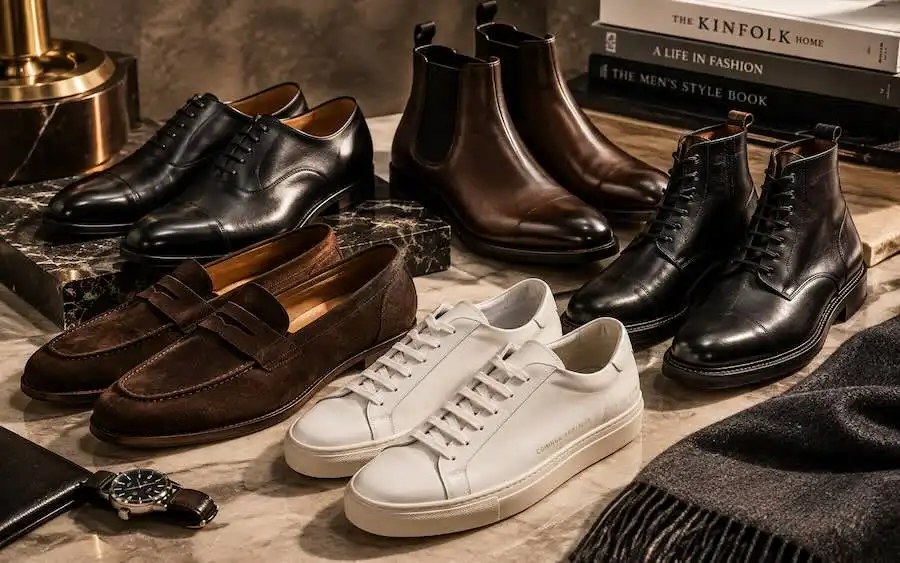
Investment footwear in 2026 is less about collecting more shoes and more about choosing pairs with the construction, comfort, and versatility to earn their place in your wardrobe.
A good shoe changes the posture of an outfit before anyone notices the label. The leather catches the light. The sole feels substantial underfoot. The silhouette works with tailoring on Monday and a softer, more relaxed wardrobe by Friday. For men building a considered closet in 2026, that kind of flexibility matters.
The smartest approach is simple: buy fewer pairs, understand how they are made, and choose designs you can realistically wear for years. From traditional Oxfords to streamlined sneakers, these are the five designer shoe styles every man should consider.
1. A Proper Pair of Oxford Shoes
Trends move quickly around menswear, yet the Oxford remains remarkably still. Its closed-lacing construction and restrained profile give it a formality that sneakers and loafers simply cannot reproduce.
For the most versatile investment, start with a black cap-toe Oxford. It works with formal tailoring, eveningwear, weddings, and the occasions when dressing down is not an option. Dark brown offers more flexibility with navy, grey, and earth-toned suits.
Construction matters here. A well-made welted shoe can potentially be resoled rather than discarded once the outsole wears through. Crockett & Jones explains its Goodyear-welted construction, while John Lobb and Church’s remain useful reference points for traditional luxury Oxfords.
2. The Loafer That Does Almost Everything
If the Oxford is the disciplined shoe in the wardrobe, the loafer is its more relaxed counterpart. It slips between settings easily, particularly as dress codes continue to soften.
A clean leather penny loafer works with tailored trousers and an unstructured jacket. Suede feels softer with denim, chinos, and summer tailoring. Chunkier soles can add weight to wider trousers, but classic proportions tend to survive changing trends more gracefully.
That versatility is why loafers deserve serious consideration before another highly seasonal purchase. Gucci’s men’s loafer collection demonstrates how far the silhouette can move between heritage and contemporary styling.
3. A Minimal Designer Sneaker
The minimalist sneaker has matured. What once felt like a fashion interruption is now an established part of the modern men’s wardrobe.
The strongest versions avoid excessive branding and complicated detailing. Think clean panels, balanced proportions, a comfortable sole, and a color palette that can move between jeans, relaxed trousers, and casual tailoring.
White remains useful, although cream, stone, grey, and understated black can be easier to maintain. Common Projects helped define the pared-back luxury sneaker aesthetic, while Prada offers a more fashion-driven interpretation.
Materials deserve scrutiny too. Sustainability claims around alternative leathers can be complicated, so look beyond marketing language and examine composition, durability, repairability, and manufacturing information. Good On You’s guide to mushroom-based leather alternatives provides useful context around one emerging material category.
4. The Chelsea Boot
There is something quietly efficient about a Chelsea boot. No complicated hardware. No elaborate lacing. Just two elastic side panels, a close-fitting ankle, and a shape that can shift character depending on the leather and sole.
A slim black pair gives tailoring a sharper edge. Brown leather softens denim and wool trousers, while suede brings texture to autumn outfits. If wet weather is part of daily life, prioritize grip and weather resistance rather than choosing solely by appearance.
Saint Laurent remains synonymous with the narrow, rock-influenced version of the silhouette. For something grounded in durable construction and everyday wear, R.M. Williams offers a distinctly different interpretation.
5. A Refined Lace-Up Boot
The final position belongs to something heavier. A refined lace-up boot introduces structure when loafers or sneakers feel too light, particularly with substantial winter fabrics.
The trick is avoiding a pair so exaggerated that it becomes difficult to style. A relatively clean upper, sturdy sole, and restrained hardware give the boot longevity. Wear it beneath wide wool trousers, straight denim, or cropped trousers when you want the footwear to become part of the silhouette.
Bottega Veneta is a useful reference for how luxury designers reinterpret substantial boots without losing polish. The same principle applies at any price: proportion comes first.
How to Choose Designer Shoes That Actually Last
The label should never be the entire argument. Before buying, look closely at the upper, lining, stitching, sole construction, and whether the manufacturer provides meaningful care or repair options. A beautifully finished shoe that hurts after twenty minutes is not an investment. Neither is an expensive sneaker that cannot survive regular wear.
Fit deserves particular attention because sizing can vary significantly between brands and lasts. Try shoes with the socks you expect to wear, walk in them, and pay attention to heel movement and pressure around the widest part of the foot.
Then maintain them. Let leather footwear rest between wears, use appropriately sized shoe trees where suitable, clean dirt before it settles into the material, and condition leather according to the manufacturer’s instructions. Care of Carl’s shoe-care guide provides a useful introduction to maintaining quality footwear.
A Practical Five-Pair Designer Shoe Wardrobe
- Black Oxford: formal occasions and traditional tailoring.
- Brown or suede loafer: smart-casual dressing and warm-weather tailoring.
- Minimal sneaker: everyday wear, travel, denim, and relaxed tailoring.
- Chelsea boot: transitional weather and polished casual outfits.
- Refined lace-up boot: colder weather and heavier silhouettes.
You do not need all five immediately. Build slowly. The right pair should solve a genuine wardrobe need rather than simply occupy another shelf.
Conclusion
Designer shoes make the most sense when craftsmanship and wearability justify the price. In 2026, that means looking beyond novelty and choosing silhouettes with enough restraint to remain useful after the season changes.
A polished Oxford, an easy loafer, a clean sneaker, and two carefully chosen boots can cover an extraordinary amount of ground. Buy according to your actual life, care for what you own, and give good materials time to develop character. That’s where investment footwear begins.
FAQ: Designer Shoes for Men
Which designer shoe should a man buy first?
Start with the gap in your wardrobe. For formal dressing, a black or dark brown Oxford is difficult to beat. For a predominantly smart-casual wardrobe, a quality loafer may receive considerably more wear.
Are designer shoes worth the money?
They can be, but price alone does not guarantee quality. Construction, materials, fit, repairability, and how frequently you will wear the shoes matter more than the logo.
Are designer sneakers a good investment?
For wardrobe utility, a restrained sneaker can offer excellent cost per wear. Treating fashion sneakers as financial investments is different: resale values fluctuate and should not be assumed.
How many pairs of quality shoes does a man need?
There is no universal number. A focused rotation of three to five pairs can cover most wardrobes when the styles complement how you actually dress.
How can you make expensive leather shoes last longer?
Rotate them rather than wearing the same pair continuously, clean and condition them appropriately, store them away from excessive heat and moisture, and investigate professional repair before replacing a well-made pair.