




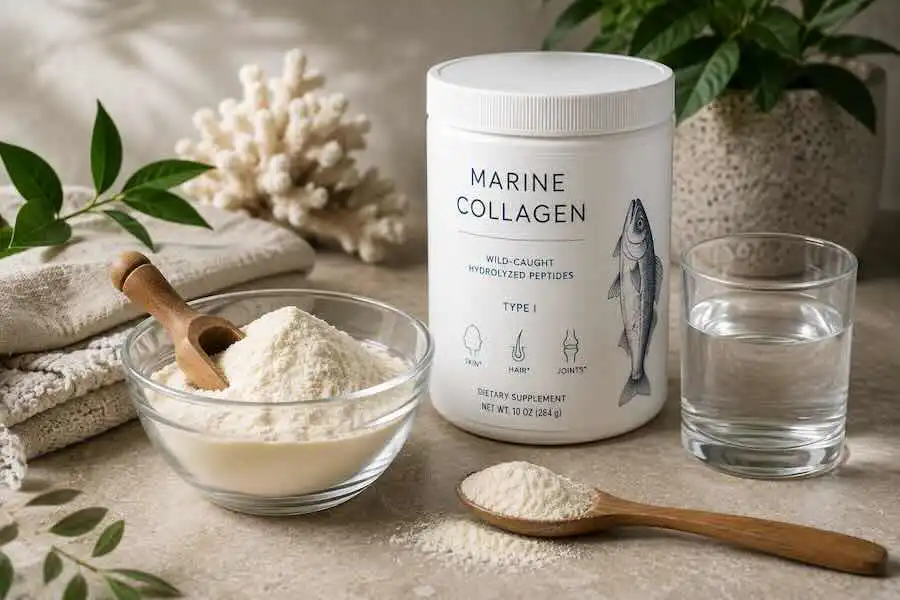
Marine collagen has moved from niche beauty supplement to a familiar presence in powders, capsules, smoothies, and morning coffee. Derived primarily from fish skin and scales, it supplies collagen peptides rich in the amino acids used throughout the body’s connective tissues. For anyone considering marine collagen for skin, hair, nails, joints, or bones, however, expectations matter just as much as the ingredient itself.
The appeal is easy to understand. Collagen is a major structural protein in the human body, while natural collagen production and existing collagen structures change with age. Marine collagen offers a convenient dietary source of collagen peptides, but it should be viewed as a supplement rather than a shortcut to younger skin or stronger joints.
What Is Marine Collagen?
Marine collagen is collagen sourced from fish, commonly using skin, scales, and other parts that might otherwise become processing waste. Most marine collagen supplements predominantly provide Type I collagen, a collagen type found extensively in skin, bone, tendons, and other connective tissues.
Many supplements contain hydrolyzed collagen. Hydrolysis breaks collagen into smaller peptides that can be digested and absorbed after consumption. This is one reason collagen peptides are easily incorporated into powdered supplements and drinks. For a broader overview of collagen supplementation, Healthline’s collagen guide examines the evidence behind several commonly discussed uses.
Marine Collagen and Skin
Skin is where marine collagen receives most of its attention. Collagen contributes to the skin’s underlying structure, and age-related changes in collagen are associated with visible changes in firmness, texture, and elasticity. That connection has made oral collagen peptides particularly attractive within the beauty-from-within category.
Research into hydrolyzed collagen supplements has produced promising findings for measures such as skin hydration and elasticity, although results vary between formulations, doses, study designs, and individuals. Marine collagen should therefore complement rather than replace fundamentals such as sun protection, nutrition, sleep, and a consistent skincare and moisturizing routine.
- Skin hydration: Some studies of collagen peptides have reported improvements in measures of skin moisture after consistent supplementation.
- Elasticity: Collagen supplementation has been investigated for its potential to support skin elasticity as part of the body’s wider collagen metabolism.
- Visible signs of aging: Certain trials have reported changes in wrinkle measurements, although collagen supplements should not be presented as a replacement for evidence-based dermatological care.
What About Hair and Nails?
The beauty conversation quickly moves from skin to hair and nails. Marine collagen contains amino acids including glycine and proline, but claims that collagen directly produces thicker hair should be treated cautiously. Hair growth is influenced by genetics, hormones, nutrition, health conditions, stress, and numerous other factors.
Collagen may still fit into a broader nutrition routine, particularly for people interested in protein-rich beauty supplements. Just don’t confuse anecdotal reports of shinier or fuller-looking hair with guaranteed clinical results. The same applies to nails: there is research exploring collagen peptides and brittle nails, but individual responses can differ substantially.
Joint and Bone Support
Marine collagen isn’t exclusively a beauty product. Type I collagen is an important structural component of bone, while collagen peptides more broadly have also been studied in relation to musculoskeletal health.
This is an area where precision is important. Joint discomfort has many possible causes, and collagen supplements should not be described as a treatment for unexplained pain or inflammation. Anyone experiencing persistent joint pain, swelling, reduced mobility, or suspected bone loss should speak with an appropriate healthcare professional rather than relying on supplementation alone.
How to Choose Marine Collagen
The supplement aisle can look deceptively simple: pale tubs, clean typography, promises of glowing skin. Turn the container around, though, and the details matter. When comparing marine collagen products, look beyond the front-label beauty claims.
- Hydrolyzed collagen peptides: This indicates that the collagen has been broken into smaller peptides.
- Clearly identified source: Look for manufacturers that state the fish species or sourcing information rather than simply using the term “marine.”
- Transparent serving information: Compare the actual quantity of collagen supplied per serving rather than judging products by scoop or capsule count.
- Independent quality testing: Third-party testing can provide additional reassurance about purity and contaminants.
- Sensible additional ingredients: Vitamin C contributes to normal collagen formation, but elaborate ingredient lists are not automatically better.
There is no universal marine collagen dose that guarantees a particular cosmetic or physical result. Product formulations and research protocols differ, so follow the manufacturer’s directions and seek professional guidance when supplementation intersects with an existing medical condition, medication, pregnancy, or a therapeutic diet. Medical News Today provides additional background on collagen and its proposed benefits.
Sustainability: Look Beyond the Word “Marine”
One of marine collagen’s more interesting qualities is its potential connection to food-industry upcycling. Producing collagen from fish skin and scales can create value from material that might otherwise become waste.
Still, “marine” does not automatically mean sustainable. Fishing method, species, geography, processing, traceability, and manufacturing standards all influence a product’s environmental footprint. Consumers who prioritize sustainability should look for transparent sourcing information and credible fisheries certifications rather than relying on broad environmental claims.
Who Should Avoid Marine Collagen?
Marine collagen is fish-derived, making it unsuitable for vegans and generally unsuitable for anyone who needs to avoid fish because of an allergy. People with food allergies should inspect ingredient and cross-contamination statements carefully rather than assuming that “marine” means shellfish-free or allergy-safe.
Anyone with a medical condition, dietary restriction, or uncertainty about whether a supplement is appropriate should discuss it with a qualified healthcare professional.
Marine Collagen vs Bovine Collagen
| Feature | Marine Collagen | Bovine Collagen |
|---|---|---|
| Typical Source | Fish skin, scales, and related fish materials | Cattle hides and other bovine tissues |
| Common Collagen Type | Predominantly Type I | Typically Types I and III |
| Dietary Consideration | Potential option for some pescatarians | Land-animal derived |
| Allergy Consideration | Not suitable for people with relevant fish allergies | Does not contain fish-derived collagen |
| Common Formats | Powders and capsules | Powders, capsules, and formulated foods |
Practical Takeaway
If you’re curious about marine collagen, choose a hydrolyzed product from a manufacturer that clearly identifies its source, serving size, and quality controls. Give more weight to transparent labeling than dramatic before-and-after promises.
And keep the hierarchy straight. A supplement sits on top of the basics, not underneath them. Adequate nutrition, sun protection, movement, sleep, and appropriate medical or dermatological care remain far more important than anything arriving in a collagen tub.
Conclusion
Marine collagen occupies an interesting space between beauty, nutrition, and the growing interest in healthy aging. Its Type I collagen content and convenient hydrolyzed formats make it an appealing option, while emerging research helps explain why collagen peptides continue to attract attention.
The quieter approach is also the smarter one: choose carefully, stay skeptical of extravagant claims, and treat marine collagen as one possible component of a wider wellness routine. Good skin and resilient bodies are built from far more than a scoop of powder.
FAQ: Marine Collagen
What is marine collagen made from?
Marine collagen is generally produced from fish-derived materials such as skin and scales. Supplements commonly contain hydrolyzed Type I collagen peptides.
Does marine collagen help skin?
Studies of oral collagen peptides have reported potential improvements in measures including skin hydration and elasticity. Results depend on the formulation, dosage, duration, and individual, so benefits should not be treated as guaranteed.
How long does marine collagen take to work?
There is no single timeline that applies to everyone. Clinical studies generally assess changes after consistent supplementation over a period of weeks or months rather than days.
Does marine collagen taste like fish?
Unflavored hydrolyzed products are generally designed to mix easily into food or drinks, although taste and odor vary by manufacturer and formulation.
Can people with fish allergies take marine collagen?
Marine collagen is fish-derived, so people with fish allergies should not assume it is safe. Check the product’s allergen information and seek medical advice where appropriate.
Is marine collagen better than bovine collagen?
Not necessarily. They have different sources and collagen profiles, and the better choice depends on dietary preferences, allergies, formulation, quality, and the reason for supplementation.