




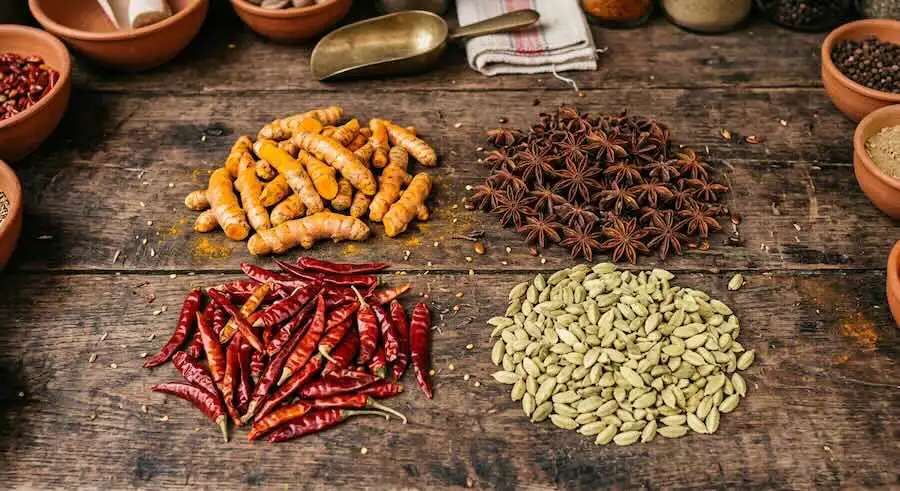
Flavor is geography made edible. Climate, trade routes, centuries of culinary trial and error — every regional cuisine carries its own history in the way it seasons a pot. The restraint of Japanese dashi and the smoke-heavy richness of South American asado are really the same impulse wearing different clothes: taste as a way of understanding a place, and the people who built a life around it.
The Foundations of Flavor
Taste, technically, is just five signals — sweet, sour, salty, bitter, umami. Flavor is something bigger: taste layered with smell, texture, and heat, shaped by ingredient, method, and the cultural habits passed down around a stove. East Asian cooking tends to balance sweet against salty; European cooking leans on dairy and butter for its particular kind of richness. Different instruments, same orchestra.
The 2026 Flavor Frontier
The global palate has narrowed its focus in 2026 — away from broad categories like “Indian” or “Mexican,” toward something closer to Hyper-Regionality. Diners now want the specific: a single valley in Oaxaca, a coastal village in Kerala. Precision Fermentation is part of what’s making that possible — a technology that lets chefs recreate rare, traditionally fermented flavors, ancient garums, hyper-specific miso strains, anywhere in the world, sustainably.
Neuro-Gastronomy has emerged alongside it. Culinary scientists are pairing global spices for cognitive benefit as much as taste — turmeric matched with specific fats to maximize anti-inflammatory effect, West African fonio prized for its low glycemic index and nutty character. Ancient practice and modern health science, meeting in the same bowl. Comfort food, redefined as something closer to a functional act.
Asia: Aromatic Complexity
Asia’s flavor range owes as much to geography as to unbroken tradition. Indian cooking builds spice in layers — cumin, coriander, turmeric, garam masala — each one carrying regional history and climate adaptation as much as taste. The north leans into heavy, rich curry; the south turns to coconut, tamarind, and chili alongside tropical fruit.
China, Japan, and Korea share an obsession with balance, if not much else in execution. Chinese cooking layers sweet against sour, salty against umami, heat against mild — Peking duck and Sichuan hot pot both hold complexity and comfort at once. Japanese cooking runs the opposite direction: restraint, seasonality, umami carried by miso, soy, and dashi through ramen and sushi alike.
Southeast Asia stays bright and tart. Thai cooking balances lime, chili, fish sauce, and herb into something sour, sweet, salty, and spicy all at once. Vietnamese pho builds its character through layering rather than intensity — star anise and cinnamon threading through a stock built slowly.
Europe: Technique and Regional Pride
French cooking is precision as philosophy — béchamel and hollandaise built the same exacting way across countless dishes, butter and wine reduction and slow cooking producing something rich and deliberately layered.
Italy runs the opposite direction: simplicity, and faith in the ingredient. Olive oil, tomato, fresh herb, cheese — risotto, pizza, pasta all reflect a deep read on quality and balance rather than technical complexity.
Scandinavia works from preservation and terroir instead. Smoking, pickling, curing — gravlax and sauerkraut both answer to long cold seasons and short growing windows. Foraged herbs, berries, and mushroom round out a cuisine built as much around gathering as cooking.
Africa: Earth and Fire
North African cooking carries Mediterranean, Arab, and Berber influence in equal measure — slow-cooked stew, careful spice layering, fruit and vegetable and meat built for warmth and depth in a single pot.
West Africa runs fierce and communal — chili, peanut, fermented condiment defining dishes like egusi soup and jollof rice, built from local grain and vegetable. East African coastal cooking carries centuries of Indian and Arab trade — curry spice, coconut milk, seafood woven through.
Southern Africa’s contribution is fire itself — braai, the open grilling and smoking tradition that gives meat its char and depth. Sorghum, maize, wild herb — indigenous ingredients still anchoring the region’s modern cooking.
The Americas: Boldness and Fusion
Mexican cooking layers pre-Columbian tradition against European and African influence — chili, chocolate, maize, fresh herb combining in mole and tacos al pastor into something simultaneously fire, sweetness, and savor.
South America runs on fire and fermentation. Brazilian feijoada layers bean, pork, and spice into a slow stew; Argentine asado is pure technique — open-fire grilling that lets beef speak for itself, wood smoke as the only real seasoning. Peruvian cooking experiments harder than most — quinoa, potato, aji pepper combining into something both lively and precise.
The US runs as pure fusion — barbecue alone tells the story, Carolina vinegar tang against Kansas City tomato sweetness, each wave of immigration adding its own thread: Italian, Chinese, Mexican, folded continuously into what “American food” even means.
Oceania: Minimalism and Indigenous Influence
Australian cooking merges European technique with native ingredient — bush tomato, wattle seed, kangaroo — into something that reads as a genuine revival of local terroir. New Zealand leans on lamb, seafood, and produce, cooked simply enough to let the ingredient carry the dish.
Māori hangi — cooking underground with hot stones — produces an earth-and-smoke flavor unlike almost anything else in global cooking. A method that says plainly: flavor is landscape, given enough time and heat.
Why Flavor Transcends Borders
Perception of flavor runs on genetics, environment, and memory all at once. Sweetness and umami read as near-universal preference; bitterness and strong sourness usually need cultural introduction to land. Spice, fat, and method all shape how a flavor lands — comfort, excitement, nostalgia, depending entirely on what a person grew up around. Trade and migration have worn down old boundaries too — chili, vanilla, tomato, all once regionally exclusive, now travel freely and root themselves in new culinary contexts entirely.
Where Global Flavor Is Heading
Consumer preference, sustainability, and technology are all pulling flavor in the same few directions at once.
- Clean-label flavor: Minimally processed, non-GMO, allergen-free — demand here is driving real innovation in natural flavor extraction and plant-based alternatives.
- Ethnic and exotic flavor: Real appetite for authenticity over approximation — za’atar, gochujang, ají amarillo, all moving from niche to mainstream.
- Health-oriented development: Turmeric, ginger, adaptogenic herb — ingredients chosen as much for function as flavor now.
- Technological innovation: Flavor encapsulation and precision fermentation are making more intense, more stable flavor possible, especially in beverages and alternative protein.
- Sustainability and sourcing: Transparency has become part of the flavor story itself — vanilla from Madagascar, citrus from Italy, traceable back to source.
None of this is static. Flavor moves with social value, scientific progress, and trade — always some blend of authenticity, innovation, and accountability.
Conclusion
Understanding global food is really an invitation to travel through the senses. Every region carries nature, history, and human ingenuity in its dish. The food flavors market tracks this shift in real terms — natural, sustainable, health-conscious demand reshaping a massive industry, driven by globalization and real advances in flavor technology. Clean-label and plant-based demand will likely keep steering it. How we explore the world’s flavor is, in the end, a reflection of how connected the world already is — and a small, daily promise toward something more sustainable and more genuinely delicious.
Recipe: Sesame-Ginger Chickpea Buddha Bowl
A quick way to taste the theme of this piece in one bowl — Asian and Mediterranean technique meeting in the same dish.
Ingredients
For the bowl:
- 1 cup cooked chickpeas (canned or homemade)
- 1 cup cooked brown rice or quinoa
- 1 cup shredded red cabbage
- 1 cup baby spinach or kale
- 1 medium carrot, julienned
- ½ cucumber, sliced
- 1 avocado, sliced
- 2 tbsp toasted sesame seeds
- 2 tbsp chopped fresh cilantro or parsley
For the sesame-ginger dressing:
- 2 tbsp soy sauce (or tamari for gluten-free)
- 1 tbsp toasted sesame oil
- 1 tbsp rice vinegar or lemon juice
- 1 tbsp maple syrup or honey
- 1 tsp freshly grated ginger
- 1 clove garlic, minced
- 1 tsp sriracha or chili sauce (optional, for heat)
Instructions
- Prepare the chickpeas.
Drain and rinse if canned. For more flavor, sauté in a splash of sesame oil with a pinch of salt for 3–4 minutes until lightly golden.
- Make the dressing.
Whisk together soy sauce, sesame oil, vinegar or lemon juice, maple syrup, ginger, garlic, and sriracha in a small bowl. Set aside.
- Assemble the bowl.
- Divide rice or quinoa between two bowls.
- Arrange chickpeas, cabbage, spinach, carrot, cucumber, and avocado on top.
- Drizzle generously with the dressing.
- Garnish.
Sprinkle with sesame seeds and fresh herbs.
- Serve.
Best eaten immediately — pairs well with green tea or citrusy sparkling water.
FAQ
What are global food flavors?
The distinctive tastes, spices, herbs, and techniques that mark cuisines from different continents and cultures — shaped as much by history and geography as by ingredient.
How has flavor technology changed in 2026?
Precision fermentation now allows sustainable recreation of rare, traditionally fermented flavor. Neuro-gastronomy, meanwhile, pairs spice for cognitive benefit as much as taste — part of a broader link between mental wellbeing and physical health.
What are the most popular “exotic” flavors right now?
Za’atar, gochujang, and ají amarillo remain strong, alongside newer interest in West African fonio and Indigenous Australian bush tomato.
What is a “clean-label” flavor?
A product built from recognizable, minimally processed ingredients — free of artificial additives, synthetic chemicals, and GMOs.
How can I pair global flavors with local ingredients?
Swap in local produce and protein while keeping the core spice and technique of the original cuisine intact — that’s usually enough to create a fusion dish that respects both traditions.
Further Reading
- CNN Travel — World’s 50 Best Foods
- UNESCO — Intangible Cultural Heritage
- Serious Eats — Global Cuisines
- National Geographic — Flavor Science
- BBC Good Food — World Recipes
SEO Title: Global Food Flavors: A 2026 World Tour
Meta Description: How flavor differs by continent, why 2026 favors hyper-regional cooking, and a Sesame-Ginger Buddha Bowl to try it yourself.
Tagline: Every dish is a small act of geography.
Slug: global-food-flavors-2026
Focus Keyword: global food flavors 2026
Tags: global cuisine, food culture, world flavors, healthy recipes
Featured Image Concept: An overhead shot of a wooden table scattered with whole spices — star anise, turmeric root, dried chili, cardamom pods — in loose piles by color, soft natural light, no people, styled as a spice-market still life.