




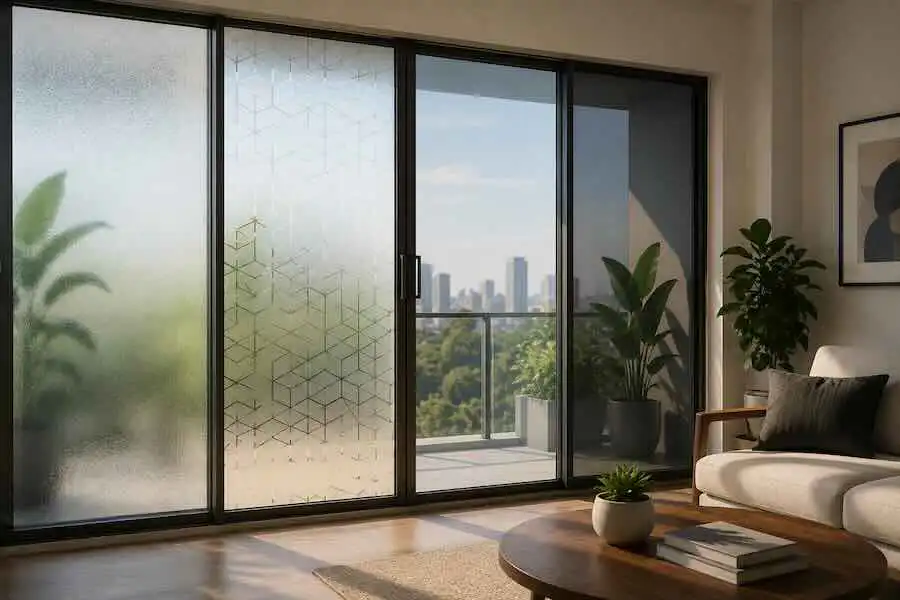
Window film is one of those rare home updates that can change how a room looks and how it feels without changing the window itself. A carefully chosen film can soften glare, create privacy, filter ultraviolet light, and reduce solar heat gain while leaving daylight in the room.
That makes window film particularly useful when curtains feel too heavy, replacement glazing is unnecessary, or a room simply needs more control over sunlight. Decorative, solar-control, privacy, low-emissivity, and security films all solve different problems, though. The key is choosing for the glass, orientation, climate, and purpose rather than treating every roll of film as interchangeable.
What Window Film Can Actually Do
The attraction is versatility. Instead of undertaking a larger renovation, you can target a specific problem at the glass. A frosted finish can obscure a bathroom window. Solar-control film can temper an intensely bright living room. Decorative patterns can give plain glazing architectural character.
It is an appealing approach when you’re making smaller updates to refresh your home, particularly because some residential films can be installed without replacing the window frame or glazing.
| Film Type | Primary Purpose | Best Suited To |
|---|---|---|
| Decorative | Pattern, texture and visual interest | Interior doors, partitions and feature windows |
| Frosted/Privacy | Obscures direct views | Bathrooms, entrances and street-facing rooms |
| Solar Control | Reduces solar heat and glare | Bright south- or west-facing glazing |
| Low-E | Helps manage radiant heat transfer | Homes where seasonal energy performance matters |
| Safety/Security | Helps retain broken glass | Vulnerable glazing and areas where glass retention matters |
Decorative Film Changes the Room Without Blocking It Off
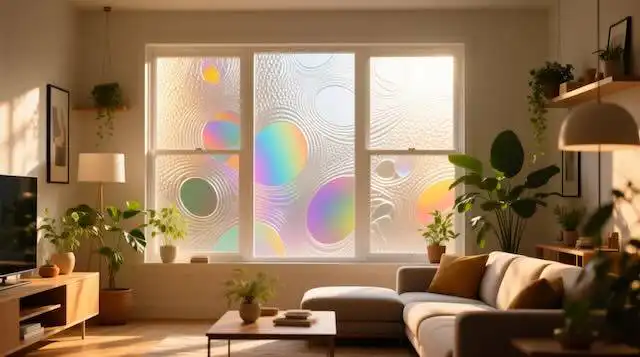
Decorative film works particularly well when a window needs visual structure rather than complete concealment. Frosted finishes diffuse hard outlines. Fine geometric patterns cast quieter shadows across a floor. Gradient films can preserve a clear view at eye level while obscuring another part of the pane.
This makes film useful for minimalist interiors where blinds or heavy curtains would interrupt clean architectural lines. Etched-glass effects can bring texture to a bathroom, while subtle patterns can create separation around an office or dining space without sacrificing natural light.
It also offers another route for homeowners exploring custom interior design details without permanently altering the glazing.
Privacy Film Has Limits
Privacy is one area where product descriptions deserve careful reading. Frosted and opaque films physically obscure the view and can therefore provide dependable privacy when correctly specified.
Reflective or so-called one-way privacy films behave differently. Their effect depends on the balance of light on either side of the glass. During daylight, a brighter exterior can make the outside surface appear reflective. At night, when interior lights are switched on and the exterior is dark, that relationship can reverse.
For bedrooms, bathrooms, and other spaces requiring reliable nighttime privacy, don’t assume reflective film can replace curtains, blinds, or genuinely obscuring glazing.
Solar-Control Film Can Make Bright Rooms More Comfortable
Large panes of afternoon glass can turn a beautiful room into a bright box of heat. Solar-control window film is designed to alter that relationship by managing portions of the solar energy passing through the glazing.
Depending on the product and existing glass, that can mean less glare around televisions and computer screens, reduced solar heat gain, and greater comfort close to the window. Performance varies significantly, so compare technical specifications rather than relying on phrases such as “heat blocking.”
Useful figures include visible light transmission (VLT), which indicates how much visible light passes through, and solar heat gain coefficient (SHGC), which describes how much solar heat enters through the glazing system. Independent organizations such as the National Fenestration Rating Council provide useful background on window energy-performance terminology.
UV Protection Helps, but Sunlight Is Only Part of Fading
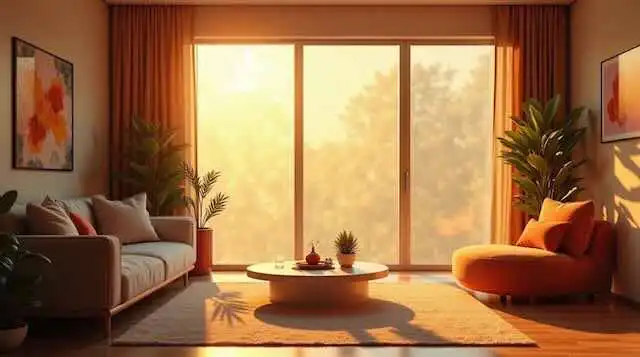
Many quality window films are designed to block a very high proportion of ultraviolet radiation. That can help reduce one contributor to fading in flooring, upholstery, photographs, and artwork.
It is worth keeping the claim in perspective. UV exposure is not the only cause of fading; visible light, heat, material chemistry, and time also contribute. Window film can therefore form part of an interior-protection strategy, but it cannot make furnishings immune to sunlight.
Security Film Is About Glass Retention, Not Invincibility
Safety and security films are thicker products designed to help hold fractured glass together after impact. Instead of loose shards immediately scattering across a room, the film and its adhesive can help retain fragments as a more cohesive sheet.
That distinction matters. Security film does not make ordinary glass unbreakable, nor should a basic film-only installation be described as equivalent to purpose-built security glazing.
Performance depends on film thickness, adhesive, glass type, frame condition, installation, and whether an attachment system secures the filmed glass to the frame. If burglary resistance, storm protection, or another safety-critical application is the objective, professional specification is the sensible route.
Can Window Film Lower Energy Bills?
It can, but there is no responsible universal percentage to promise. Savings depend on climate, glazing area, window orientation, existing glass performance, shading, HVAC efficiency, film specification, and household behavior.
A sun-heavy room with large west-facing windows may present a much stronger case for solar-control film than a shaded north-facing room. Likewise, low-emissivity films are designed with different seasonal priorities than dark solar tints.
Think in terms of targeted thermoregulation rather than a guaranteed utility-bill reduction. The immediate benefit may simply be a sofa that no longer feels baked by late-afternoon sun or a home office where the screen remains visible without closing the blinds.
Check Glass Compatibility Before Installation
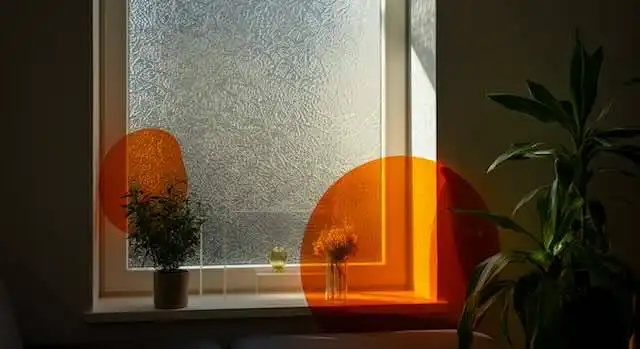
This is the step that deserves more attention than it usually receives. Not every film is appropriate for every window.
Insulated glass units, laminated glass, tempered glass, low-E coatings, older glazing, and unusually large panes can have different compatibility requirements. Adding a highly absorptive film to unsuitable glazing can change its thermal behavior and may increase stress in the glass.
Check both the film manufacturer’s compatibility chart and your window warranty before installation. If you’re already considering replacing windows or doors, compare the performance and cost of new glazing with retrofitting existing panes before investing in film.
DIY Window Film: Where Precision Matters
Small decorative and privacy films are among the more approachable DIY options. The actual application is simple; achieving a clean finish is where patience enters.
- Measure carefully: Follow the manufacturer’s cutting allowance rather than assuming every film needs the same overlap.
- Clean the glass thoroughly: Dust, grease, fibers, and dried residue can remain visible beneath transparent film.
- Use the recommended application solution: Adhesive systems differ, so follow the product instructions instead of relying on a universal soap mixture.
- Squeegee methodically: Work trapped solution and air toward the edges without creasing the film.
- Trim with a fresh blade: Clean edges make an enormous difference to the finished appearance.
- Respect curing time: Temporary haze or small moisture pockets may appear while some adhesive films cure.
Large panes, difficult access, expensive glazing, and security-film systems are stronger candidates for professional installation.
How to Maintain Window Film
Once cured, window film is generally quiet maintenance. Use soft microfiber cloths or non-abrasive cleaning tools and a cleaner approved by the manufacturer. Avoid scraping the surface with blades or abrasive pads.
Film lifespan varies by product, glass orientation, climate, installation quality, and exposure. Instead of assuming every installation lasts a fixed number of years, keep the warranty documentation and inspect the surface periodically for peeling edges, bubbling, discoloration, or delamination.
Practical Takeaway: Choose the Problem Before the Film
Start with one question: what exactly do you want the window to do differently?
If the problem is visibility, investigate privacy film. If it is afternoon heat, compare solar-performance data. If furniture is exposed to intense sunlight, examine UV specifications. If safety is the concern, look at tested safety or security systems rather than decorative products with vague “protective” language.
For purely visual changes, film can also be an inexpensive companion to other budget-friendly home improvements. A clean frosted pane, pale walls, and natural daylight can alter a room with remarkably little construction.
Conclusion: A Small Surface With a Surprisingly Large Effect
Window film works best when it is treated as a technical finish rather than a miracle renovation. The right product can make daylight softer, views more private, glare less intrusive, and sun-heavy rooms noticeably easier to live in.
The beauty is its restraint. Nothing structural needs to change. The glass remains where it was, but the character of the light shifts — and sometimes that is enough to make the entire room feel different.
FAQ: Window Film for Homes
Does window film really reduce heat?
Solar-control films can reduce solar heat entering through compatible glazing, but performance varies substantially by film, glass, orientation, climate, and shading. Compare manufacturer performance data for the specific product and glazing combination.
Can window film provide privacy at night?
Frosted or opaque privacy films can obscure views regardless of daylight. Reflective one-way films generally depend on one side being brighter than the other, so they may not provide the same privacy after dark when interior lights are on.
Can I install window film myself?
Many decorative, static-cling, and residential adhesive films are suitable for careful DIY installation. Large windows, specialty glazing, and safety or security applications may justify professional installation.
Will window film damage double-pane windows?
Compatible films can be used with many insulated glazing systems, but not every film is appropriate for every double-pane window. Always check the film manufacturer’s glass-compatibility guidance and the window warranty first.
Does window film stop furniture from fading?
UV-filtering film can reduce an important contributor to fading, but ultraviolet radiation is not the only cause. Visible light, heat, material composition, and time also influence color deterioration.
Is security window film burglar-proof?
No. Security film can help retain shattered glass and, in appropriately designed systems, make penetration more difficult. It should not be described as making ordinary glazing burglar-proof or unbreakable.