




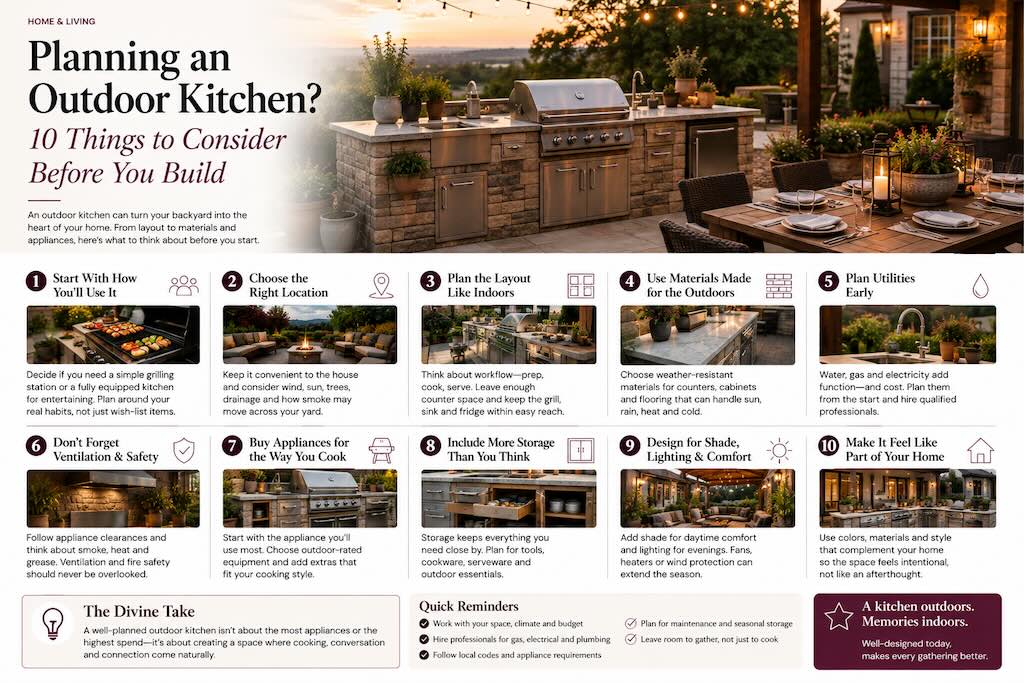
An outdoor kitchen can turn a backyard into one of the most-used spaces at home. But before choosing a beautiful grill, stone countertop or built-in refrigerator, there are less glamorous decisions that matter much more: where the kitchen should sit, how it will handle the weather, which utilities it needs and whether the layout actually makes cooking outdoors enjoyable.
The best outdoor kitchens aren’t necessarily the biggest or most expensive. They’re the ones designed around how people actually cook, eat and entertain. If you’re considering adding one to your home, these are the details worth getting right before construction begins.
1. Start With How You’ll Actually Use the Kitchen
Before drawing up a layout, think about what you want your outdoor kitchen to do. There’s a considerable difference between a compact grilling station used on summer weekends and a fully equipped second kitchen designed for regular entertaining.
For a simple setup, a grill, preparation surface and some storage may be enough. Frequent entertainers might appreciate refrigeration, a sink, additional burners, generous counter space and seating nearby.
Planning around your real habits rather than an aspirational list of appliances can keep the project more functional — and prevent expensive features from sitting unused.
2. Choose the Location Carefully
An outdoor kitchen should feel connected to the house without interfering with the rest of the garden. Ideally, carrying ingredients, dishes and cookware between the indoor and outdoor kitchens shouldn’t feel like a journey.
Also consider prevailing wind, afternoon sun, nearby trees, drainage and how cooking smoke may travel. A beautiful kitchen in an uncomfortable location is unlikely to get much use.
If space is limited, don’t assume an outdoor kitchen is impossible. A streamlined run of cabinets and a grill against one wall can be more useful than an oversized island squeezed into a small patio.
3. Plan the Layout Like an Indoor Kitchen
Good kitchen design is largely about movement. You need somewhere to take food out, prepare it, cook it and serve it without constantly crossing the space.
Leave useful counter space around your main cooking area rather than filling every available inch with appliances. A landing area beside the grill is particularly valuable when you’re handling hot trays and cooked food.
If you’re adding a refrigerator, sink and grill, consider how naturally you can move between the three. And if people will be sitting at the kitchen island, avoid positioning seats where guests will obstruct the main cooking zone.
4. Use Materials Designed for Outdoor Conditions
This is where an outdoor kitchen differs significantly from its indoor counterpart. Sun, rain, humidity, temperature changes and, in some climates, freezing conditions can be hard on materials that look perfectly suitable inside a home.
Stone, concrete, porcelain and appropriately specified masonry can all work outdoors, depending on the climate and application. Stainless steel is commonly used for appliances and cabinetry because of its durability, although the grade and quality matter — particularly in coastal environments.
Countertops, cabinets, flooring, adhesives and finishes should all be rated for exterior use. Choosing solely by appearance can result in fading, cracking, corrosion or water damage later.
5. Think About Utilities Before Construction Starts
Adding electricity, water or gas can dramatically change both the cost and complexity of an outdoor kitchen.
A sink requires water supply and drainage. Refrigerators, lighting and small appliances require appropriately installed outdoor electrical service. Built-in gas appliances may require dedicated gas lines and ventilation considerations.
These aren’t details to improvise after cabinets and countertops are already installed. Decide which utilities you genuinely need during the planning stage and use qualified professionals for work involving gas, electricity and plumbing where required.
6. Don’t Forget Ventilation and Fire Safety
A grill placed in an entirely open garden behaves differently from one installed beneath a roof, pergola or enclosed structure.
Cooking appliances generate considerable heat, smoke and grease. Manufacturer-required clearances from combustible materials should be incorporated into the design, and covered or partially enclosed kitchens may require additional ventilation.
This is one area where aesthetics should never take priority over proper installation. Check local building requirements and the specifications for the exact appliances being installed.
7. Buy Outdoor Appliances for the Way You Cook
It’s easy for an outdoor kitchen wish list to grow: grill, pizza oven, smoker, refrigerator, ice maker, side burner, warming drawer. But every appliance takes up valuable space and increases the project’s cost.
Start with the appliance you’ll use most. For many households, that’s a good grill. Build outward from there according to your cooking habits.
Whatever you choose, make sure appliances are intended for outdoor installation rather than simply moving indoor equipment outside.
8. Include More Storage Than You Think You’ll Need
Storage is one of the features that separates a convenient outdoor kitchen from a grill surrounded by countertops.
Drawers and cabinets can provide dedicated places for grilling tools, serving pieces, outdoor tableware and other essentials, reducing the number of trips back into the house.
What you store outside will depend on the climate and how weatherproof the cabinetry is. Even with exterior-rated storage, some items are better brought indoors during long periods of bad weather or over winter.
9. Design for Shade, Lighting and Comfort
The kitchen itself is only part of the experience. If the cook is standing in intense afternoon sun or everyone disappears indoors as soon as it gets dark, the space hasn’t been fully considered.
A pergola, awning or other suitable shade solution can make the area considerably more comfortable during warmer months. For evenings, combine practical lighting around preparation and cooking surfaces with softer ambient lighting around dining and seating areas.
Depending on the climate, fans, heaters or protection from wind can also extend the number of months the space remains enjoyable.
10. Make the Outdoor Kitchen Feel Like Part of the Home
An outdoor kitchen doesn’t have to replicate your interior, but the two spaces should feel related. Repeating a material, color or architectural detail from the house can make a new addition feel intentional rather than attached as an afterthought.
Keep the palette relatively restrained and let natural materials, greenery and food provide much of the color. Even highly functional elements such as storage can disappear visually when cabinetry and countertops are treated as part of one coherent design.
Is an Outdoor Kitchen Worth It?
It can be — particularly for households that already spend a lot of time outdoors and regularly cook or entertain there. But an outdoor kitchen shouldn’t be planned solely around the assumption that it will increase a home’s resale value.
Its greatest value may simply be how much more usable it makes the space you already have. A thoughtfully designed kitchen can turn a neglected patio into a natural gathering place for long lunches, summer dinners and evenings with friends.
The key is to build for your climate, your space and the way you actually live. Get those fundamentals right, and you don’t need a sprawling luxury setup to create an outdoor kitchen that feels special.
Frequently Asked Questions
What does an outdoor kitchen really need?
At its simplest, an outdoor kitchen needs a cooking appliance, useful preparation space and a durable surface designed for exterior conditions. Storage, refrigeration, water and additional appliances can be added depending on how frequently you plan to use the space.
What is the best countertop material for an outdoor kitchen?
There isn’t one material that’s best for every home. Climate, sun exposure, freezing temperatures, maintenance and budget all matter. Natural stone, concrete and outdoor-rated porcelain are among the options worth considering, but installation and suitability for local conditions are just as important as the material itself.
Does an outdoor kitchen need to be covered?
Not necessarily. A cover can provide welcome protection from sun and rain, but placing cooking appliances beneath a structure introduces additional clearance and ventilation considerations. Always follow appliance specifications and applicable local requirements.
Can you build an outdoor kitchen in a small backyard?
Yes. A compact linear kitchen with a grill, counter and storage can work surprisingly well. Prioritizing the features you’ll actually use is usually more effective than trying to squeeze a full indoor-style kitchen into a small outdoor area.