




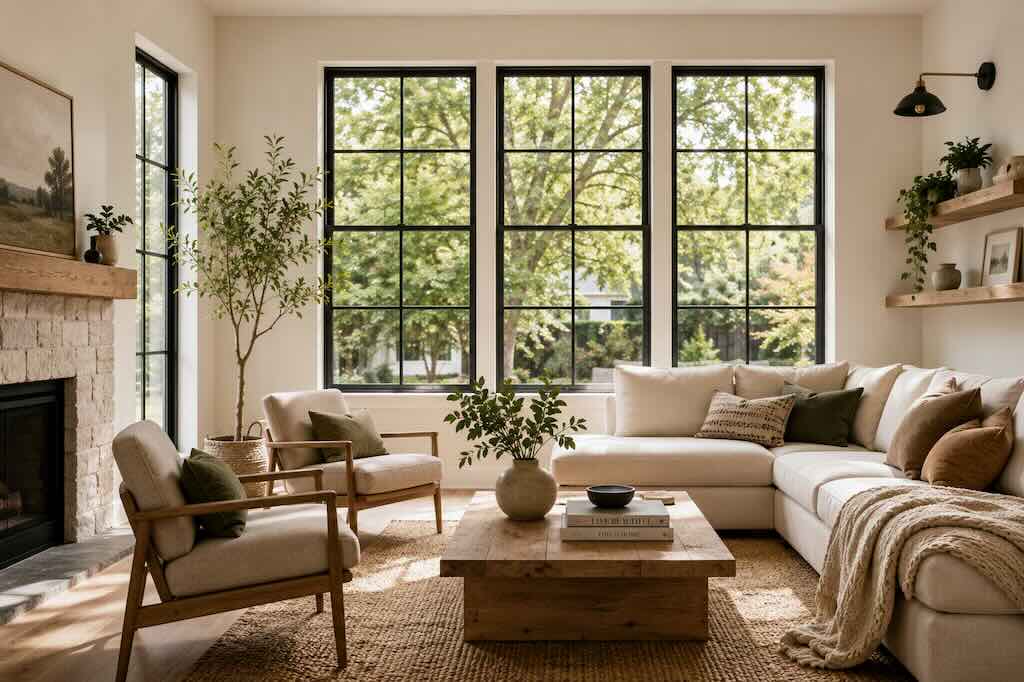
We tend to decorate around windows rather than think about the windows themselves. We choose curtains, move furniture, change wall colours and wonder why a room still feels darker, colder or more enclosed than we imagined.
But windows quietly influence almost everything about how a home feels. They determine where morning light lands, what you see from the sofa, how connected a room feels to the garden and even where furniture naturally wants to sit.
That doesn’t mean every slightly imperfect window needs replacing. In many homes, cleaning the glass, changing heavy window treatments or simply reconsidering the furniture around it can make a surprising difference. But when windows are damaged, difficult to operate or performing poorly, replacement can become both a practical and aesthetic decision.
Natural light changes more than brightness
Watch the same room from breakfast until evening and you’ll understand why natural light is such a powerful design material.
Morning light can make pale timber and warm neutrals glow. Strong afternoon sun changes how paint colours appear. A large window can make a relatively modest room feel more open simply because your eye continues beyond the walls.
Before assuming a room needs more artificial lighting, look at what is happening around the windows. Heavy curtains, furniture placed directly in front of the glass, overgrown planting outside and dark blinds can all reduce the daylight already available.
The frame is part of the interior
A window isn’t visually separate from the room around it. Its proportions, frame and position become part of the architecture.
Traditional homes may suit divided panes and more detailed frames, while simpler profiles can complement contemporary interiors. Dark frames create definition and contrast; lighter frames tend to recede and allow the view to become the focus.
Neither approach is automatically better. The strongest choice is usually the one that makes sense with the architecture rather than the one currently appearing most often on your inspiration board.
Think about the view as though it were artwork
One of the easiest design opportunities to overlook is sitting on the other side of the glass.
If a living-room window looks onto a tree, courtyard or garden, arrange the room so the view becomes part of the composition. A chair angled toward greenery can completely change how a corner is used. A dining table placed near a window can make an everyday breakfast feel different.
Not every window comes with a beautiful landscape, of course. Where the outlook is less appealing, sheer curtains, planting or carefully positioned blinds can soften it without sacrificing all of the daylight.
Comfort matters just as much as appearance
A beautiful window isn’t particularly enjoyable if sitting beside it means feeling a persistent draught.
If a room is noticeably uncomfortable around its windows, investigate the cause before assuming replacement is the only answer. Seals, frames, glazing and installation can all affect performance, and the appropriate solution will depend on the condition and construction of the existing window.
When replacement is genuinely needed, energy performance deserves as much attention as appearance. Glazing, frame construction and installation quality can influence how effectively a window limits unwanted heat transfer.
A window should be easy to live with
There is another quality that rarely makes the mood board: usability.
A window that sticks every time you try to open it, is awkward to clean or can’t provide useful ventilation quickly becomes frustrating regardless of how attractive it looks.
Consider how you actually use each room. In a kitchen, easy ventilation may matter enormously. In a bedroom, privacy and the ability to control early morning light might matter more. In a living room overlooking a garden, maximizing the view could take priority.
The same window solution doesn’t need to appear throughout every room simply for the sake of consistency.
Sometimes the window isn’t the problem
Before committing to replacement, try looking at everything immediately surrounding the window.
Remove unnecessary objects from the sill. Pull furniture slightly away from the glass. Wash the windows inside and out. Try a lighter curtain. Raise the curtain rod. Trim greenery that is blocking daylight outside.
You may discover that the window you thought was too small simply wasn’t being allowed to do its job.
And when replacement does make sense…
Look beyond the showroom sample.
Think about the proportions of your home, the direction of the light, ventilation, security, maintenance and energy performance. Ask about warranties and installation as carefully as you ask about frame colours and handles.
Most importantly, consider what the window will look like from both sides.
From outside, it belongs to the architecture. From inside, it becomes part of your everyday life — framing rainy mornings, changing seasons, neighbours passing by and those rare evenings when the light happens to fall perfectly across the room.
That’s a lot of responsibility for something we often treat as little more than a hole in the wall.