




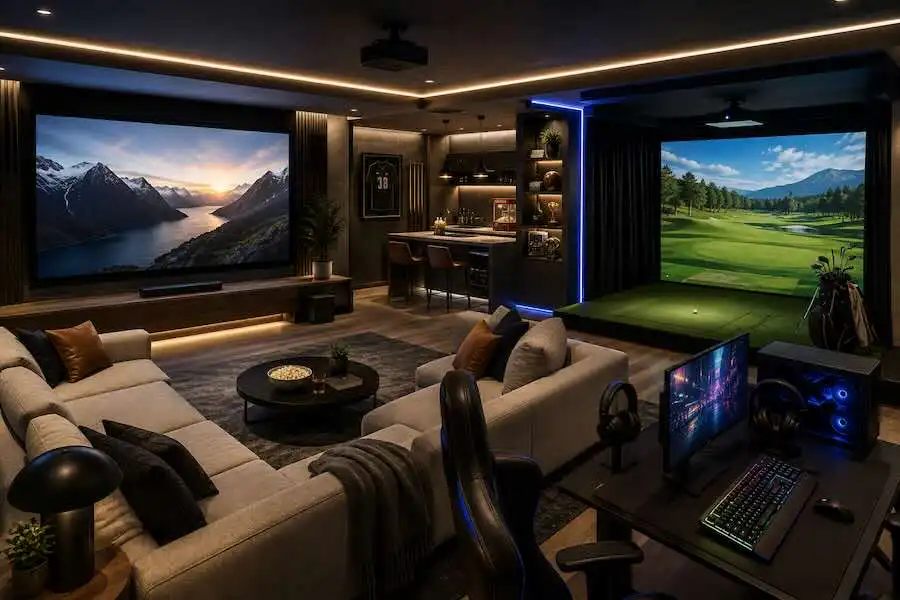
An entertainment room works best when it changes character without changing rooms. One hour it is quiet enough for a film; the next, friends are gathered around a game, a match, or a simulator. The strongest spaces in 2026 are therefore less about filling a spare room with technology and more about controlling sightlines, sound, light, movement, and comfort.
Start with the experience you care about most. A cinema-first room needs darkness and acoustics. Gaming demands responsive equipment and comfortable ergonomics. A sports room needs open floor space and seating that still works when more people arrive. Once that priority is clear, the rest of the room can quietly adapt around it.
Let the Room Have More Than One Life
A spare room does not need a rigid identity. Instead, divide it into subtle zones: a screen-facing lounge, a compact gaming position, storage along a quieter wall, perhaps a drinks station tucked into an otherwise unused corner.
There is no need to build physical partitions. A rug can define the sofa area while a change in lighting separates the gaming desk. Low cabinetry creates another visual boundary without interrupting the room. This approach is especially useful when working with a smaller entertainment space, where every square foot needs a reason to exist.
Leave Space for the Game
Sports simulation changes the architecture of an entertainment room because it requires something most media setups do not: empty space. A golf simulator, for example, needs sufficient room for a safe swing as well as the correct screen, projector position, and viewing distance.
That makes planning more important than simply choosing equipment. Measure ceiling height and usable width before buying anything, then mark the hitting and movement zones on the floor. Furniture can be arranged around those dimensions rather than forcing the simulator into a finished layout later.
The same principle applies to VR and other active games. Flexible floor space has value of its own. Sometimes the smartest piece of furniture is the one you decide not to add.
Build the Cinema Around Darkness
A good home cinema begins before the projector switches on. Daylight slipping around a curtain, reflections from a glossy wall, or a bright lamp within the viewer’s peripheral vision can flatten an otherwise impressive image.
Blackout window treatments and restrained ambient lighting give you far greater control. Ultra-short-throw projectors can also make sense where floor space is limited because they sit close to the projection surface. For rooms shared with sports simulation, compare projectors designed for simulator installations against the requirements of your movie setup before committing to one system.
Choose Seating by What Happens After the Film
Rows of dedicated cinema recliners look convincing, but they can make a multifunctional room surprisingly inflexible. A deep sofa, movable lounge chair and a pair of lightweight poufs create a softer arrangement that can be changed when guests arrive.
Performance fabrics are useful where food and drinks are part of the evening. Meanwhile, nesting tables and movable side tables provide somewhere to put a glass without permanently consuming floor space. In a smaller room, a storage ottoman can perform three jobs at once: seat, table and concealed storage.
Make Technology Visually Quieter
The screen should command attention when it is being used. The cables, chargers, controllers and routers should not.
Closed cabinetry keeps smaller electronics out of sight, while ventilated media units can accommodate equipment without creating a tangle beneath the television. Collections can become part of the interior too. A few carefully displayed vintage consoles, records or golf clubs bring personality to the room without turning every wall into storage.
For PC gaming, an ergonomic gaming desk with integrated cable management keeps the working edge of the room cleaner. Allow enough depth for the monitor and keyboard rather than choosing a desk purely by width.
Lighting Should Disappear Into the Experience
Entertainment-room lighting is most convincing when you notice the atmosphere rather than the fixtures. Start with dimmable general illumination. Add focused light where someone might pour a drink, find a controller or use a desk. Then introduce restrained accent lighting behind cabinetry or a screen.
Multiple circuits or smart scenes make those layers considerably more useful. A cinema setting might lower almost everything to a faint warm glow, while a social setting can bring back wall and table lighting without flooding the room from the ceiling.
Treat Sound as Part of the Interior
A large screen can dominate the eye, but sound determines much of how immersive the room actually feels. Hard floors, bare walls and large windows reflect sound; rugs, upholstered furniture and heavy curtains soften those reflections naturally.
Acoustic panels can be incorporated more deliberately when needed. Rather than covering every surface, position treatment around the room’s main listening area and deal with obvious reflection points first. If the room is being renovated from the shell, additional sound isolation can also help prevent late-night films and games from travelling through the rest of the house.
Give Snacks and Drinks Their Own Corner
A small refreshment station changes how the room functions during longer evenings. It might be nothing more than a compact refrigerator, narrow counter and closed cupboard for glasses and snacks. That is often enough.
Position it away from screens and expensive electronics where possible. A couple of stools can turn the same corner into a casual place to talk while someone else is playing. Materials should be easy to wipe clean and visually connected to the rest of the room rather than designed like a separate miniature kitchen.
Spend First on the Experience You Use Most
It is easy for an entertainment-room budget to disappear into equipment. Instead, rank purchases according to frequency of use. Film lovers may benefit more from better speakers and light control than another decorative feature. Gamers may notice the chair, desk and display every day. Golfers need enough physical room before premium simulator hardware becomes worthwhile.
Design the infrastructure first: power, network access, ventilation, acoustics and cable routes. Furniture and technology can then change over time without requiring the entire room to be rebuilt. This is particularly valuable when converting a basement or underused room into a dedicated leisure space.
A Room That Changes With the Evening
The most successful entertainment room does not look like a catalogue of gadgets. In daylight, it can feel calm and architectural. By evening, curtains close, the lighting drops, sound fills the room and the technology comes forward.
That transformation is the point. Plan around movement and comfort first, hide what does not need to be seen, and leave enough flexibility for the room to change as your interests do.
Entertainment Room FAQ
What is the best layout for a small entertainment room?
Keep the central floor area relatively open and move larger storage pieces toward the perimeter. Multifunctional furniture, wall-mounted storage and movable seating allow a compact room to switch between watching, gaming and socializing more easily.
How can I make an entertainment room feel more like a cinema?
Control stray light first. Blackout window treatments, dimmable lighting and darker matte surfaces around the screen can improve the viewing environment. Then address sound with appropriate speaker positioning and soft furnishings or acoustic treatment.
Should I buy the projector before designing the room?
No. Establish the room dimensions, screen position, viewing distance, ambient-light conditions and intended uses first. Those factors determine which projector specifications make sense for the space.
Can a golf simulator and home theater share one room?
They can, provided the room has adequate dimensions and the projector, screen and audio arrangement work for both uses. The simulator’s required hitting area and safe swing clearance should be established before permanent furniture is positioned.
Guest Contributor: Nifty Golf Content Team