


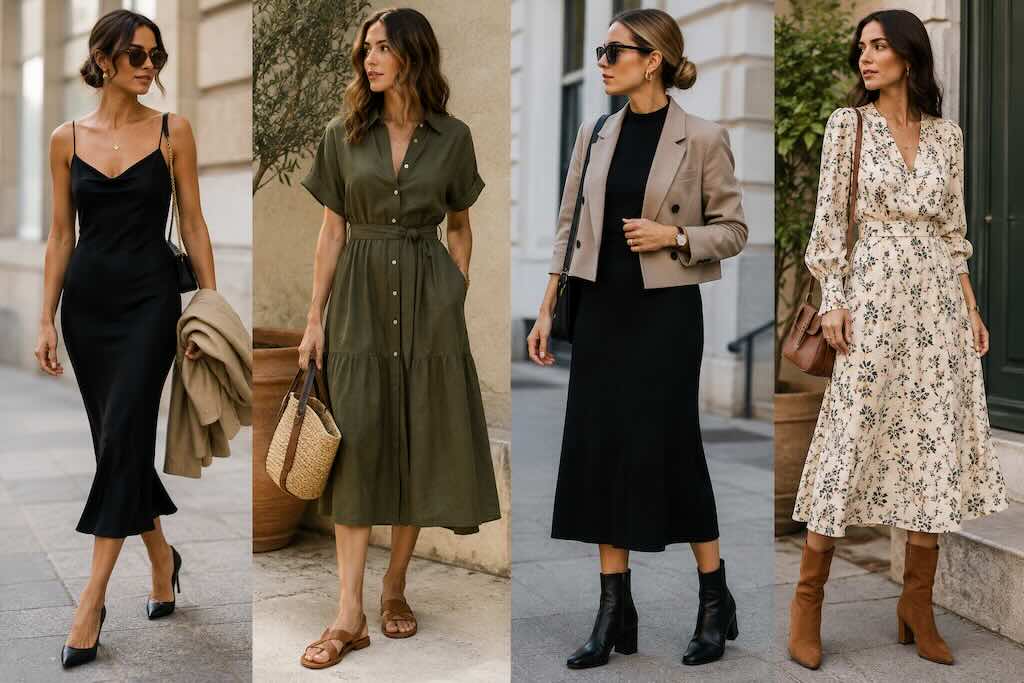
The midi dress remains a wardrobe fixture because it occupies useful territory between a mini and a maxi. It can feel relaxed, polished or sharply minimal depending on the cut, fabric and styling around it. The difficult part is rarely the length itself. It is proportion.
That matters in 2026, when midi silhouettes are moving in several directions at once. Clean ’90s-inspired dresses sit beside softer drop waists, fuller shapes and more experimental proportions. The result is less about following one formula and more about understanding where the dress falls on your body and what happens above and below that line.
Editor’s note: This article has been updated for 2026 to remove unsupported sizing and technology claims, refresh the fashion references, clarify fabric guidance and make the styling advice useful across a wider range of heights and body proportions.
Start With Where the Midi Actually Falls
The word “midi” describes a range rather than one exact measurement. A contemporary midi can finish just below the knee, around mid-calf or closer to the lower shin. Vogue’s 2026 midi styling guide similarly describes the silhouette as sitting between mini and maxi lengths.
That makes your own proportions more useful than a generic height rule. The same dress can finish at a completely different point on two people, even when they normally buy the same clothing size.
Stand naturally and look at where the hem interrupts the leg. If a dress feels visually heavy, experiment with a slightly shorter or longer hem before deciding that midi dresses simply don’t suit you.
- Try petite or tall ranges: These can adjust more than the hem, including waist placement and other vertical proportions.
- Look at the waist: A beautifully positioned hem cannot compensate for a waist seam sitting noticeably above or below where the garment was designed to fit.
- Consider tailoring: A modest hem adjustment can materially change how the entire silhouette reads.
- Ignore rigid height rules: Leg length, torso length, footwear and the shape of the dress all influence the final proportion.
The Shape Matters as Much as the Length
A midi is not one silhouette. Slip dresses, shirt dresses, column shapes, fit-and-flare designs and fuller drop-waist dresses can all share roughly the same hemline while behaving completely differently on the body.
Current fashion makes that distinction particularly useful. Vogue’s spring and summer 2026 trend coverage points to relaxed drop waists and playful proportions, while its 2026 minimalist midi edit highlights the return of pared-back ’90s-inspired dresses.
If you want a clean vertical line, a straighter column or fluid slip can work beautifully. If you prefer definition, look for a shaped waist or controlled volume. A fuller skirt creates movement but may benefit from a simpler top half so the dress does not feel visually crowded.
The aim isn’t to make yourself look taller or smaller. It is to make the proportions appear intentional.
Choose Shoes That Complete the Line
Footwear changes the visual ending of a midi dress, which makes it one of the easiest ways to alter the mood without touching the hem.
Pointed flats and streamlined heels can create a cleaner continuation through the foot. Loafers add weight and structure. Minimal sneakers pull a dress toward casual territory, while boots can make a fluid midi feel considerably stronger.
There is no requirement to wear heels. Height can alter proportion, but so can toe shape, color, ankle coverage and the visual weight of the shoe.
- For a cleaner line: Try a pointed flat, slingback or understated heel.
- For everyday dressing: A low-profile sneaker can offset a more polished midi.
- For autumn and winter: Let a sleek boot meet or disappear beneath the hem rather than creating an awkward strip of exposed leg.
- For a stronger silhouette: A loafer or substantial boot can deliberately add visual weight.
If footwear is the difficult part, Divine’s guide to choosing shoes for different occasions offers a broader starting point.
Use Outerwear to Control the Proportions
Layering is where midi styling becomes more interesting. A cropped jacket can expose the waist and divide the outfit clearly, but it is not the only flattering option.
A long coat can work just as well when its line relates deliberately to the dress underneath. What tends to feel awkward is an outer layer ending at an arbitrary point and creating several competing horizontal breaks.
A waist-length leather jacket brings definition. An oversized blazer creates contrast against a narrow midi. A long coat can produce one continuous winter line. Meanwhile, a lightweight cardigan or knit gives a summer dress enough texture to move into cooler weather.
Divine’s guides to transitioning a wardrobe from summer to fall and building a polished dress code offer more ideas for working those layers into an existing wardrobe.
Let the Waistline Do Some of the Work
When a midi feels shapeless, the instinct is often to blame the hem. Sometimes the real issue is higher up.
A defined natural waist can give a fuller skirt structure. A deliberately dropped waist creates a longer torso and a softer, less conventional silhouette. A straight slip dress removes the waist almost completely and relies on fabric movement instead.
None is inherently more flattering. The important distinction is whether the placement looks deliberate. A belt can help, but it should solve a proportion problem rather than becoming an automatic addition to every loose dress.
Fabric Changes the Entire Silhouette
Two dresses cut from the same pattern can behave very differently once fabric enters the equation.
Crisp cotton holds volume. Satin catches light and follows movement. Linen brings visible texture and a relaxed surface. Knits can trace the body more closely, while heavier woven fabrics create stronger architectural shapes.
TENCEL™ Lyocell is another option frequently used where softness and fluidity are desirable. According to TENCEL’s current fiber information, its lyocell fibers are wood-derived, produced through a closed-loop process and offer a smooth hand with moisture-control properties.
Material labels still need careful reading. “Recycled,” “organic” or “sustainable” should not automatically be treated as proof that an entire garment has a low environmental impact. Fiber composition, production, durability, care and how frequently you will actually wear the dress all matter.
For a broader approach to clothing and consumption, see Divine’s guide to building a more eco-conscious lifestyle.
Keep Accessories in Conversation With the Dress
A midi already creates a strong block of fabric, particularly when it is printed or voluminous. Accessories can either sharpen that shape or compete with it.
With a minimalist column dress, a substantial bag, sculptural jewelry or stronger shoe can add tension. With a floral or highly textured dress, quieter accessories often give the fabric enough room to register.
Scale matters here too. A tiny bag beside a dramatic full skirt creates a different effect from a large soft tote. Neither is wrong. Decide whether you want contrast or continuity.
Build the Outfit Around One Clear Idea
The easiest way to make a midi feel accidental is to solve every part of the outfit independently.
Instead, decide what the dress is doing. Is it a clean minimalist base? A romantic printed piece? A structured office dress? A loose summer shape?
Then let the shoes, jacket and accessories support or deliberately contrast with that idea. A fluid black midi with flat sandals needs very little. A soft floral dress can become sharper with a leather jacket and boots. A structured midi can relax immediately beside sneakers and a simple knit.
That’s also why inclusive style advice matters. Good styling should provide tools rather than insist that one body shape, height or size is the standard every outfit needs to imitate.
A Simple Midi Dress Styling Formula
- Check the hem: Look at where it falls on your leg rather than relying on the size label or model photograph.
- Check the waist: Make sure the dress’s intended proportions correspond with your torso.
- Choose the shoe deliberately: Decide whether you want the footwear to lengthen, soften or add weight to the silhouette.
- Add one useful layer: Cropped, oversized or long can all work when the relationship with the dress is intentional.
- Consider the fabric: Drape and structure can affect the silhouette as much as the actual pattern.
- Tailor when necessary: A small alteration can turn an almost-right dress into one you repeatedly wear.
Conclusion
The midi dress does not require a particular height, body type or pair of heels. It requires proportion.
In 2026, that leaves plenty of room to experiment. Minimal columns, dropped waists, fluid slips and fuller silhouettes are all part of the conversation. Find the hem and shape that work on your body, then use footwear and layers to finish the line.
When those elements feel considered, the midi stops being difficult. It simply becomes a dress you know how to wear.
Frequently Asked Questions
Are midi dresses still in style in 2026?
Yes. Midi lengths remain prominent in 2026 fashion, appearing across minimalist dresses, floral styles, drop-waist silhouettes and more experimental shapes.
Can petite women wear midi dresses?
Yes. There is no minimum height for wearing a midi. Pay attention to where the hem and waist fall on your individual proportions, and consider petite sizing or tailoring when standard cuts sit awkwardly.
What shoes look best with a midi dress?
It depends on the dress and the effect you want. Pointed flats and heels can create a cleaner line, sneakers make the silhouette more casual, loafers add structure and boots work particularly well through cooler seasons.
Can you wear flat shoes with a midi dress?
Absolutely. Ballet flats, loafers, sandals and streamlined sneakers can all work. Heel height is only one part of proportion; toe shape, ankle coverage and visual weight also influence the outfit.
What jacket should you wear with a midi dress?
Cropped jackets can emphasize the waist, oversized blazers create deliberate contrast and long coats can form a clean continuous line. The best choice depends on the shape and volume of the dress.
How do you stop a midi dress from looking frumpy?
Start by checking fit rather than assuming the midi length is the problem. Hem position, waist placement, fabric, footwear and outerwear all affect the silhouette. Often one small adjustment is enough.