




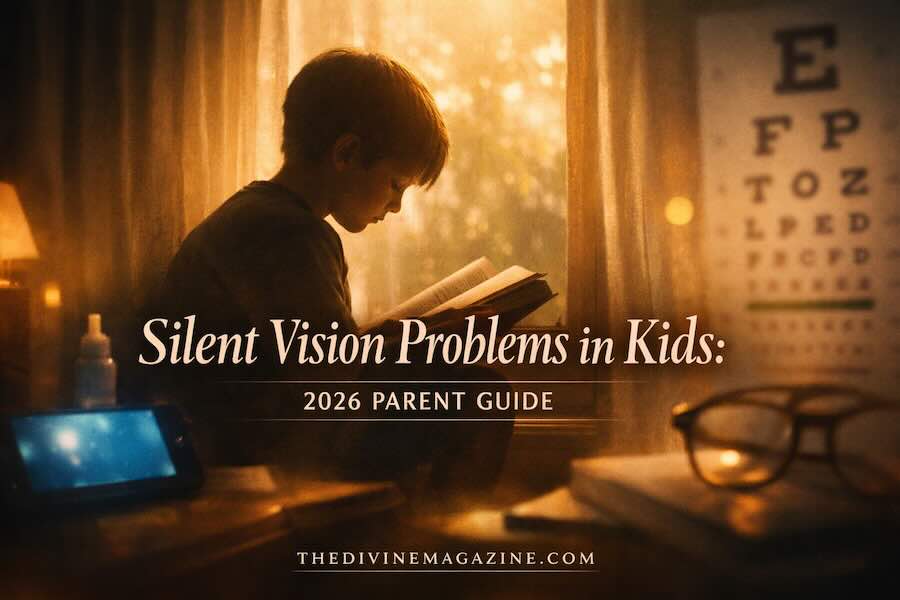
Children today use screens, VR headsets, AI learning tools, and digital classrooms more than any generation before them. While technology has unlocked incredible opportunities, it has also introduced new challenges for young eyes. Vision problems in kids often develop quietly, showing subtle signs that parents may overlook. If you want to protect your child’s eye health in 2026, here are five silent signs that may indicate they’re struggling with their vision.
1. Increased Screen Fatigue & Digital Eye Strain
With children spending hours on tablets, laptops, and VR learning platforms, digital eye strain has become one of the most common hidden vision issues. If your child frequently rubs their eyes, squints at bright screens, or avoids homework after long digital sessions, they may be experiencing early signs of screen‑related vision stress. Research from The American Academy of Ophthalmology shows that prolonged near‑focus can accelerate myopia in young children.
2. Struggling With AI‑Driven Schoolwork
AI learning platforms require constant close‑up focus and rapid visual tracking. If your child reads slowly on digital lessons, leans too close to the screen, or skips online assignments despite understanding the material, vision issues may be the cause. These behaviors often mimic learning difficulties but are actually visual fatigue.
3. Gaming Performance Suddenly Drops
In 2026, gaming is a major part of children’s social and cognitive development. A sudden decline in reaction speed, missing familiar targets, or avoiding dark‑mode games can indicate contrast sensitivity or depth‑perception problems. Competitive gamers often hide symptoms, making this one of the most overlooked silent signs.
4. Behavioral Changes That Mask Vision Problems
Vision issues can present as irritability, clumsiness, or difficulty concentrating. For neurodivergent children, symptoms may be mistaken for ADHD or sensory overload. If your child bumps into objects, misjudges distances, or avoids eye contact due to discomfort, a vision screening may be necessary. The Boston Children’s Hospital notes that untreated vision problems can mimic behavioral disorders.
5. Avoiding Reading, Drawing, or Homework
Children rarely say “I can’t see well.” Instead, they avoid tasks that strain their eyes. If your child dislikes reading, loses their place often, or tilts their head while writing, these may be subtle signs of vision trouble. Even creative tasks — which normally boost creativity — may become frustrating when vision is impaired.
Bonus: Tele‑Optometry Makes Early Detection Easier
In 2026, parents can book remote eye screenings through pediatric tele‑optometry platforms like EyeQue or VSP Vision. During video calls, optometrists can spot head tilting, delayed tracking, and inconsistent focus — early indicators of vision issues.
Conclusion
Vision problems in children often develop quietly, hidden behind digital habits, schoolwork struggles, or behavioral changes. By paying attention to subtle signs and using modern tools like tele‑optometry and early screenings, parents can protect their child’s eye health before issues escalate. In a world filled with screens and immersive technology, proactive care is more important than ever.
FAQ: Children’s Vision in 2026
How often should children get eye exams?
Most experts recommend annual exams, especially for kids using screens daily.
Can screen time permanently damage vision?
No — but excessive near‑focus can accelerate myopia progression.
Are VR headsets safe for kids?
Yes, in moderation. Limit sessions and ensure proper headset fit to reduce strain.
Do vision problems affect school performance?
Absolutely. Many learning difficulties are actually undiagnosed vision issues.
What’s the biggest silent sign?
Avoidance — children quietly stop doing tasks that strain their eyes.
Vision 2026: Early detection, smart tech, and attentive parenting keep young eyes healthy in a digital world.