




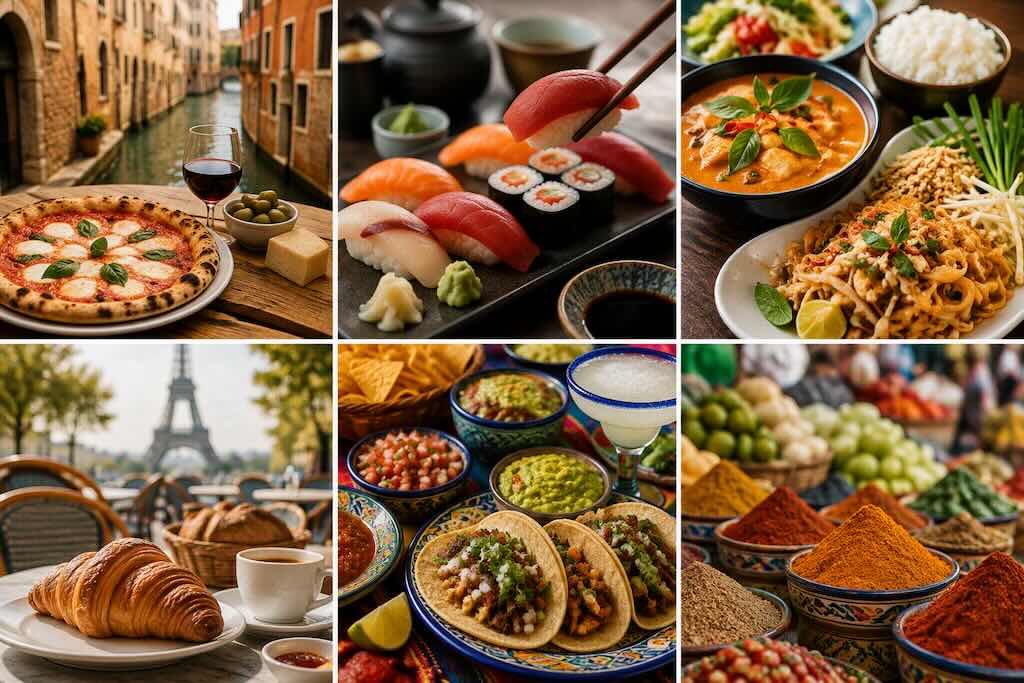
Some trips are remembered through landmarks. Others stay with you through taste: the smoke rising from a street-side grill, the first bite of handmade pasta, or the sharp perfume of herbs crushed moments before dinner. For travelers who organize their days around what and where to eat, these five destinations offer some of the richest food experiences to seek out in 2026.
Food-focused travel works best when the restaurant reservation is only part of the story. Markets, neighborhood bakeries, family kitchens, regional ingredients and culinary traditions reveal just as much about a place. UNESCO describes traditional culinary practices as an important part of living intangible heritage, connecting food with seasonality, local products, knowledge and community.
Italy: Follow the Regions, Not Just the Menu
Italy rewards travelers who resist treating Italian cuisine as one single thing. Bologna, Naples, Sicily, Tuscany and Piedmont each bring different ingredients, techniques and rhythms to the table. Pasta changes shape. Sauces change character. Cheese, bread and wine can shift within surprisingly short distances.
Naples is essential for pizza, while Bologna makes a persuasive base for fresh pasta and the cooking traditions of Emilia-Romagna. Sicily adds citrus, seafood, pistachios, couscous and sweets to the picture. The country’s food culture also extends far beyond restaurants. Browse produce, cheese and cured meats early in the morning, then watch the same ingredients reappear on plates later that evening.
Divine’s guide to the most impressive markets in Italy is a useful starting point for building those encounters into an itinerary. There is deeper cultural context too: UNESCO recognizes both the Mediterranean diet and the art of the Neapolitan pizzaiuolo among culinary traditions associated with intangible heritage.
Japan: Precision Meets Everyday Pleasure
Japan can move from exquisite restraint to exuberant comfort food in the space of a train ride. A morning might begin with fish and rice, lunch could mean ramen at a narrow counter, and dinner may unfold slowly across a sequence of carefully composed seasonal dishes.
The Japan National Tourism Organization highlights the country’s remarkable regional range, from traditional washoku and sushi to izakaya dining, sake breweries and local specialties. That regionality makes moving between cities particularly rewarding.
Tokyo offers extraordinary breadth, but Osaka deserves equal attention from hungry travelers. The city is celebrated for its casual food culture, with takoyaki and okonomiyaki among the dishes closely associated with it. Japan’s official tourism organization describes Osaka as a city known for food, fun and nightlife.
For a wider look at how Japanese flavors sit within international food traditions, explore Divine’s culinary journey across continents.
Thailand: Street Food After Dark
Heat, lime, fish sauce, coconut, herbs and sweetness can meet in a single Thai dish without losing their individual edges. That balance makes Thailand particularly exciting for travelers who prefer to explore through informal eating rather than formal dining alone.
Bangkok is the obvious place to begin. Night markets and neighborhood stalls make it possible to build an evening around small plates rather than a single restaurant reservation. The Tourism Authority of Thailand’s guide to local food illustrates how street stalls, specialist vendors and casual restaurants remain integral parts of the country’s dining culture.
Then go north. Chiang Mai brings the flavors of northern Thailand into focus, including bowls of fragrant khao soi. The official Chiang Mai tourism guide points visitors toward local cuisine alongside markets and Lanna culture.
Before ordering, Divine’s guide to Thai food for beginners provides a useful introduction, while our Bangkok guide adds context for a longer stay.
France: Look Beyond Paris
Paris can easily consume an entire food itinerary. There are warm croissants at breakfast, market stalls, neighborhood bistros, pâtisseries and dining rooms where dinner becomes an event. Yet stopping at the capital means missing much of what makes French food travel compelling.
France’s culinary identity is closely tied to place. Burgundy brings vineyards and deeply rooted regional cooking; Lyon has its bouchons; Provence shifts toward olive oil, vegetables, herbs and Mediterranean light. The official France tourism guide to gastronomy and wine connects these experiences through regional produce, markets, vineyards and culinary craftsmanship.
Travelers with more time can follow part of the country’s Vallée de la Gastronomie, which stretches from Dijon toward Marseille through landscapes shaped by vineyards, orchards and distinct local food traditions.
Mexico: Food as Living Heritage
Mexico makes a compelling final stop because food here is inseparable from history, agriculture and community. Corn, beans and chile form foundations rather than background ingredients, while regional cooking can change dramatically as you move across the country.
Mexico City offers tacos, mercados, contemporary restaurants and seemingly endless neighborhood discoveries. Oaxaca goes deeper into moles, maize, chocolate, mezcal and cooking traditions maintained across generations. Coastal regions introduce another vocabulary of seafood and citrus.
This cultural depth has international recognition. UNESCO inscribed traditional Mexican cuisine on its Representative List of the Intangible Cultural Heritage of Humanity in 2010, describing it as a cultural model encompassing farming, ritual practices, culinary techniques and community customs.
How to Plan a Better Food-Focused Trip
Leave space in the itinerary. The restaurant discovered while walking through a neighborhood can be as memorable as the reservation made months earlier. Visit markets in the morning, learn a few names for regional dishes, and ask what is seasonal rather than searching exclusively for foods already familiar from social media.
A cooking class can also provide context that restaurant dining cannot. You see ingredients before they become a finished plate and learn why particular techniques matter. Food tours can serve a similar purpose, especially during the first day in an unfamiliar city.
Conclusion
The best culinary trips are rarely about collecting famous dishes. They are about understanding where those dishes came from. Italy’s regional markets, Japan’s meticulous seasonality, Thailand’s restless street-food culture, France’s relationship with terroir and Mexico’s living culinary heritage each offer a different way into a destination.
Arrive hungry, certainly. More importantly, arrive curious.
Frequently Asked Questions
What are the best destinations for food lovers in 2026?
Italy, Japan, Thailand, France and Mexico are strong choices because each offers distinctive regional cuisines alongside markets, street food, restaurants and long-standing culinary traditions.
How can I find authentic local food while traveling?
Start with busy neighborhood markets and specialist food shops, look for restaurants serving regional dishes, and ask residents what they eat rather than only asking which restaurants tourists should visit.
Are food tours and cooking classes worth booking?
They can be particularly useful at the beginning of a trip. A knowledgeable local guide or instructor can explain ingredients, regional traditions and dishes that might otherwise be easy to miss.
Can food-focused travel work on a smaller budget?
Yes. Markets, bakeries, noodle shops, neighborhood cafés and street-food stalls can provide exceptional experiences without fine-dining prices. Mixing one special restaurant reservation with inexpensive local meals can also keep costs manageable.
Is street food safe when traveling?
No street-food stall is automatically risk-free. Look for busy vendors with frequent ingredient turnover, observe food-handling conditions and follow current destination-specific food and water safety guidance.